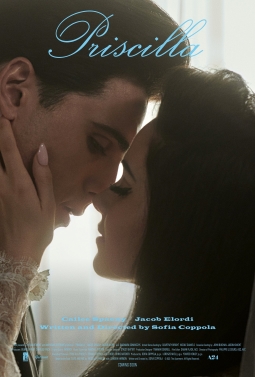
Priscilla: Sofia Coppola's View of a Captive, Isolated Love
Sofia Coppola, a filmmaker renowned for her intimate character studies and distinctive aesthetic, once again casts her signature lens on themes of captivity and isolation in her latest biographical drama, the Priscilla Movie. Based on Priscilla Presley's revealing 1985 memoir, Elvis and Me, the film offers an unvarnished, deeply personal look at one of the most talked-about relationships in pop culture history. Instead of sensationalizing, Coppola meticulously crafts a world where a young girl's exhilarating dream slowly transforms into a gilded cage, offering audiences a unique perspective often overlooked in the Elvis lore.
The Priscilla Movie centers on Priscilla Ann Beaulieu (portrayed with captivating nuance by Cailee Spaeny) and her complicated romance with Elvis Presley (a commanding Jacob Elordi). From their initial meeting in Germany when Priscilla was just 14 and Elvis a lonely 24-year-old soldier, to their tumultuous life at Graceland and eventual separation, Coppola invites viewers into Priscilla's emotional landscape. The film premiered to critical acclaim at the 80th Venice International Film Festival, where Spaeny garnered the Volpi Cup for Best Actress, further solidifying the film's impact and the power of its central performance. It later achieved a successful theatrical run, grossing $33 million worldwide, and earned Spaeny a well-deserved Golden Globe nomination for Best Actress.
A Gilded Cage: Sofia Coppola's Signature Lens on Priscilla
Coppola's cinematic universe is consistently populated by characters confined, often in spaces of extreme privilege, and the Priscilla Movie is no exception. In this narrative, the "cage" is less a physical enclosure and more a psychological and societal construct, beautifully illustrated by the world Elvis creates around Priscilla. The film meticulously tracks Priscilla's journey from a modest home in Germany, where she devours fan magazines, to the sprawling, opulent, yet strangely confining Graceland. Under the skilled eye of cinematographer Philipe Le Sourd, who previously collaborated with Coppola on The Beguiled, the visual language emphasizes a world of beautiful, often surprisingly still surfaces. These lavish backdrops, far from symbolizing freedom, often underscore Priscilla's profound sense of isolation.
Once ensconced in Graceland, Priscilla finds her life defined by waiting and adhering to unspoken rules. Instructed not to be seen on the lawn too much, she spends her days reclining in impeccably decorated, yet eerily empty, living rooms and dens. Coppola subtly hints at the passage of time and the evolving tackiness of the décor post-divorce, a poignant detail. Priscilla frequently appears lost, unsure of how to fill her days or what purpose she serves beyond being Elvis's companion. As Elvis pursues his film career, managed by an always unseen Colonel Tom Parker, he leaves Priscilla with the instruction to "keep the home fires burning," a phrase that encapsulates her limited, domestic role within their grand life.
The Genesis of a Complex Love: Innocence, Naiveté, and Control
The origin of Elvis and Priscilla's relationship is painted with layers of initial innocence and burgeoning control in the Priscilla Movie. When they first meet in Germany in 1959, Elvis, recently discharged from the Army, is genuinely lonely, grappling with the recent loss of his mother. He's drawn to the quiet, attentive Priscilla, who, at 14, is wide-eyed and somewhat overwhelmed by the attention of a global superstar. He presents as earnest and shy, a superstar seeking a connection, telling the ninth-grader he's lonesome for someone to talk to. For Priscilla, far from her familiar Austin, Texas life, this attention from such a shy, iconic figure is undeniably exhilarating.
However, the film doesn't shy away from the complexities and modern condemnations surrounding their age difference and dynamic. While terms like "groomer" are often invoked today, Coppola's strength lies in grounding the narrative firmly in Priscilla's lived experience, showing how the situation unfolded from her subjective viewpoint. Early on, both appear as naïve dreamers. Elvis, adorned with an "On The Waterfront" poster, speaks of wanting to emulate Marlon Brando and James Dean, envisioning an expansive artistic life. Priscilla, in contrast, dreams simply of being with him, her aspirations entirely tied to his existence. This stark difference in their dreams sets the stage for a relationship where one person's desires will inevitably subsume the other's. A crucial, and often unsettling, aspect of their early cohabitation is Elvis's firm refusal to sleep with Priscilla, despite having arranged to separate her from her family and effectively becoming her guardian. This withholding of intimacy, amidst increasing requests from Priscilla, highlights a significant power imbalance and a profound emotional void within their supposedly intimate bond. For a deeper dive into the societal context of their relationship, you might find Priscilla Movie: Unpacking the Memoir & Elvis's Grooming Past to be an insightful read.
Performance and Identity: Priscilla's World on Pause
Central to the impact of the Priscilla Movie is its exploration of how Priscilla's identity becomes inextricably linked to, and often overshadowed by, Elvis. Her life, as depicted, is a constant act of waiting – waiting for Elvis to return from tours, from filming, from his myriad distractions. She is groomed, both literally and figuratively, to fit his ideal: her hair styled, her makeup applied, her clothes chosen to reflect his preferences. This transformation, while making her appear as the perfect companion, simultaneously erodes her sense of self, leaving her in a perpetual state of emotional limbo.
Cailee Spaeny's award-nominated performance is pivotal in conveying this nuanced loss of self. She navigates Priscilla's journey from a starry-eyed teenager to a disillusioned young woman with remarkable subtlety. Her expressions of longing, confusion, and quiet despair are palpable, making Priscilla's internal struggle visible even when her external life is one of luxury. Jacob Elordi, as Elvis, portrays a man who, despite his own fame and power, is deeply complex, at times charming and vulnerable, at others controlling and emotionally distant. The film masterfully shows how Priscilla is expected to exist primarily as a reflection of Elvis, a silent partner in his grand narrative, leading to the poignant question: "What’s Priscilla there for, anyway?" To learn more about Cailee Spaeny's remarkable portrayal, consider reading Priscilla: Cailee Spaeny's Award-Nominated Performance Revealed.
Beyond the Glitz: Unpacking the Psychological Landscape
Coppola's Priscilla Movie delves deep into the psychological landscape of its protagonist, revealing the profound impact of this unique relationship. The constant pressure of maintaining a facade, the unfulfilled desires for genuine intimacy, and the emotional isolation in a world of constant attention all contribute to Priscilla's internal turmoil. The director's choice to keep Colonel Tom Parker, Elvis's infamous manager, entirely unseen further emphasizes Priscilla's insulated world, where external influences are filtered and controlled, leaving her even more dependent on Elvis's whims and affections.
The stark contrast between the glittering, luxurious surroundings of Graceland and the emotional emptiness Priscilla often experiences is a powerful visual metaphor. The film highlights how wealth and fame do not equate to happiness or fulfillment, particularly for someone whose agency has been gradually diminished. Priscilla's journey is ultimately one of self-discovery, culminating in her decision to leave Elvis in early 1973. This act, while painful, represents her reclaiming her identity and breaking free from the psychological confines of her "gilded cage." It's a poignant testament to the human need for autonomy and authentic connection, even in the face of immense adoration and privilege.
In the Priscilla Movie, Sofia Coppola delivers a poignant and visually stunning character study, inviting audiences to look beyond the myth of Elvis Presley and truly see the young woman who shared his extraordinary life. By focusing on Priscilla's perspective, the film offers a rare glimpse into the quiet struggles beneath the dazzling surface of celebrity, underscoring Coppola's enduring fascination with the themes of isolation, captivity, and the search for identity within gilded confines. It's a compelling and empathetic portrayal of a woman finding her voice and her freedom, one frame at a time.